
The marijuana laws in Connecticut are composed of the ongoing medical marijuana program, as well as the newly established adult-use program. The main purpose of this research paper is to provide an analysis of the restrictions, cultivation conditions, penalties, and distinctions between medical and recreational users in Connecticut in 2026.
Yes. In June 2021, Connecticut legalized recreational cannabis through the passing of the Responsible and Equitable Regulation of Adult-Use Cannabis Act (RERACA), or Public Act 21-1. Through that act, it became legal for individuals aged 21 years and above to purchase and use cannabis. Recreational cannabis was made available in the market starting from January 2023.
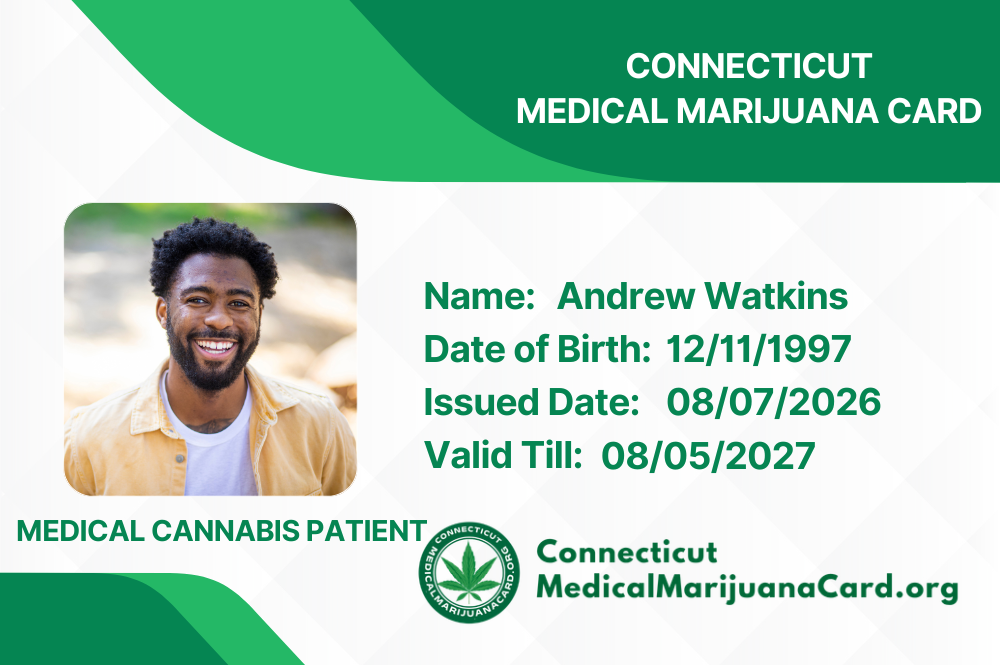
Connecticut had already established its medical marijuana program for almost 10 years before the legalization of recreational cannabis. The governor signed a bill that allowed the state to establish the medical marijuana program in 2012, allowing the public to access cannabis even when it was not yet legalized for recreational use. The two programs are regulated by the Department of Consumer Protection (DCP). While the two programs run concurrently, the medical program has many benefits over the recreational program.
The quantity of marijuana a person may carry legally under the state of Connecticut laws depends on whether the individual is a recreational user or a registered medical user.
Registered medical marijuana users have much higher limits than recreational ones, besides being exempt from paying taxes.
Being caught with more than the allowed amount of cannabis in Connecticut will depend on the amount in excess.
Since the penalty will be based on the amount, the best escape from any form of penalty will be having less than the maximum amount.
Marijuana can be cultivated by any adult citizen in the state, but will be subjected to very strict regulations relative to those of other states. Any person above the age of 21 is permitted to cultivate 6 cannabis plants at once, and these must have 3 fully grown and 3 partially grown marijuana plants. More than one adult living in the same house is allowed to cultivate 12 marijuana plants.
The cultivation process takes place indoors in a secure area and is only accessible to that particular individual. Cultivation of marijuana in Connecticut is considered a crime; it is a felony, no matter how many marijuana plants are grown. The medical users of Connecticut started cultivating their marijuana plants from October 2021 up to the legalization of adult use of marijuana in July 2023.
In Connecticut, smoking marijuana is permissible only in private settings, while it is prohibited almost everywhere else:
Driving under the influence of cannabis is considered a crime in Connecticut, and the crime carries the same weight as driving under the influence of alcohol. There is no set quantity of THC content for the crime of driving under the influence of cannabis; this is unlike the level of BAC. Determination of whether the driver is affected is done through the observations of the police and a drug recognition evaluation.
Here are the penalties imposed on the different types of crimes committed in the state of Connecticut:
It is allowed to consume edibles containing cannabis not only for medicinal but for recreational use as well, and they can be purchased in the dispensaries, which are licensed to sell such substances. Edibles produced from hemp with a level of THC below 0.3 percent are also allowed in Connecticut.
Doctors who are licensed to practice medicine in Connecticut and whose names appear in the Connecticut Prescription Monitoring and Reporting System (CPMRS) are those who can make recommendations concerning medical marijuana in Connecticut. It is required that the patient is certified under one of the designated qualifying conditions, and the recommendation should be renewed annually.
The state of Connecticut has a few legislative clauses that provide some form of protection to registered medical users, such as a ban on discrimination against registered medical users for failure to employ or termination of employment of the users based on their registration status as registered medical users. However, there is a restriction on the exercise of such rights since the employer is allowed to restrict the use of drugs in the workplace.
No. Public consumption is illegal in Connecticut; use is expected to take place at a private residence.
Adults 21 and older can visit adult-use dispensaries with a valid ID. Medical dispensaries require a valid registration through Connecticut’s Medical Marijuana Program.
Small amounts within the legal limit carry no penalty. Larger amounts, or intent to sell without a license, can escalate to felony charges.
The penalty is based on the amount and situation, which could be anything from a fine to something more severe if there’s a bigger amount or another offense.
If you have one ounce or less of marijuana without permission the first time, you will receive a fine of $150.
No. Connecticut doesn’t give its medical cannabis any reciprocity with other states.
Get your Connecticut medical marijuana card fast & easy online. Licensed doctors, quick approval, low cost. Qualify today!
Bridgeport
Stamford
New Haven
Hartford
Waterbury
Norwalk
Danbury
New Britain
Greenwich
West Hartford
©2026 All Rights Reserved. ConnecticutMedicalMarijuanaCard.org
⚡ Trusted by thousands nationwide. Get your medical marijuana card online in 10 minutes. Pay only after the doctor's approval.
BOOK APPOINTMENT NOW