
Qualifying Conditions for a Medical Marijuana Card in Connecticut

As opposed to some other states where the doctor’s sole responsibility is to certify the patient as suffering from one of the qualifying conditions, Connecticut law mandates that patients must have a disease recognized as one of the official qualifying conditions for the state. Below is a list of those conditions.
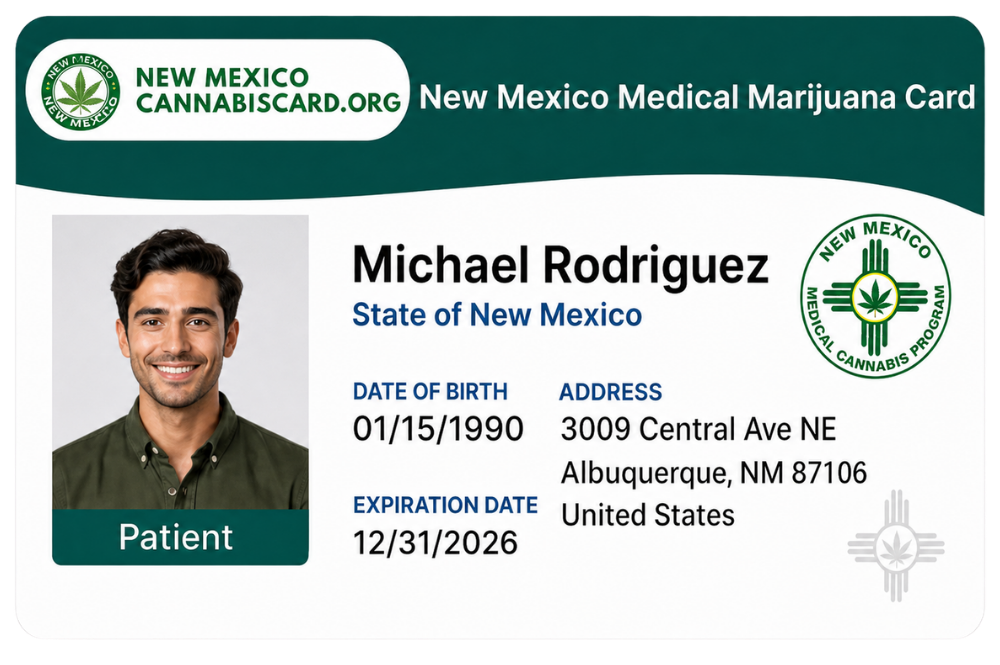
New Mexico Medical Marijuana Card

How to Qualify for a Medical Marijuana Card in Connecticut

In order to get a medical cannabis card in Connecticut, there are two basic qualifications that you have to satisfy: First, you should be a resident of Connecticut, and second, you should be suffering from one of the state’s approved conditions. This has to be done through the certification process carried out by a licensed physician from Connecticut.

Connecticut's List of Qualifying Conditions

Since its inception in 2012, the number of qualifying debilitating conditions in Connecticut has increased dramatically from an initial listing of around 22 to approximately 40 at present. The qualifying list for 2026 includes:

  • ALS (Amyotrophic Lateral Sclerosis)
  • Cachexia
  • Cancer
  • Cerebral Palsy
  • Chronic Neuropathic Pain
  • Chronic Pain (6-month duration, resistant to other treatment)
  • Chronic Pancreatitis
  • Complex Regional Pain Syndromes
  • Crohn’s Disease
  • Cystic Fibrosis
  • Ehlers-Danlos Syndrome with Chronic Pain
  • Epilepsy
  • Glaucoma
  • HIV/AIDS
  • Hydrocephalus with Severe Headache
  • Interstitial Cystitis
  • Intractable Neuropathic Pain resistant to treatment
  • Irreversible Spinal Cord Injury with Intractable Spasticity
  • MALS Syndrome
  • Movement Disorders, including Huntington’s Disease
  • Multiple Sclerosis
  • Muscular Dystrophy
  • Neuropathic Facial Pain / Trigeminal Neuralgia
  • Osteogenesis Imperfecta
  • Parkinson’s Disease
  • Persistent Headache Syndromes
  • Post-Herpetic Neuralgia
  • Post Laminectomy Syndrome with Chronic Radiculopathy
  • PTSD
  • Severe Psoriasis and Psoriatic Arthritis
  • Severe Rheumatoid Arthritis
  • Sickle Cell Disease
  • Spasticity/Neuropathic Pain of Fibromyalgia
  • Spinal Cord Damage with Intractable Spasticity
  • Terminal Illness requiring end-of-life care
  • Tourette Syndrome
  • Ulcerative Colitis
  • Uncontrolled Seizure Disorder
  • Vulvodynia and Vulvar Burning
  • Wasting Syndrome

The Connecticut Board of Physicians examines requests for conditions to be added to the list twice a year, and these requests can be made by anyone who provides supporting documentation. Given that the list is revised on a periodic basis, it may be worthwhile to consult the DCP’s own list of conditions. 

Connecticut Medical Marijuana Card Requirements

The qualifications that are necessary for obtaining a Connecticut medical marijuana card include:

  • Residency. Being a Connecticut resident is essential.
  • Diagnosis. You should suffer from one of the conditions approved by the state.
  • Certification. A licensed doctor in the state, a physician assistant, or an APRN needs to diagnose your condition and fill out the provider part of the application form.
  • Registration. The application process includes personal registration through the state online medical marijuana portal.

One of the disqualifiers in this case would be the inmates supervised by the Connecticut Department of Corrections. 

What Documents Do You Need for a Connecticut Medical Marijuana Card?

Requirements for application include:

  • Identification proof, such as a driver’s license, state ID card, or United States passport.
  • Residency proof in Connecticut, such as utility bill, bank statement, or mortgage statement, which should not be more than 90 days old and computerized rather than hand written. 

I Was Certified by a Connecticut Doctor - What's the Next Step?

When your doctor certifies your medical qualification, here’s what follows:

  • Apply for enrollment with the Connecticut Medical Marijuana Program via the Connecticut State government website.
  • Upload all your documentation together with your completed application form.
  • After your enrollment, you will receive your card enabling you to buy cannabis products from any licensed dispensary in Connecticut. 

How Much Cannabis Can a Registered Connecticut Patient Access?

Medically registered patients in Connecticut are permitted to buy up to 5 ounces during a period of 30 days only through Connecticut-licensed dispensaries. This is more than the 1.5 ounces permissible for public possession that applies to recreational users. Also, purchases made by medical patients are not subject to the excise tax on cannabis, municipal tax, and sales tax levied on recreational cannabis purchases.

Can Minors Qualify for a Connecticut Medical Marijuana Card?

Yes. Minors can apply for a Connecticut medical marijuana card, although there is an additional process involved. Two doctors must confirm the qualifying condition of the minor, and the minor must have a caregiver registered with Connecticut who takes care of buying the medical marijuana for them. The minor does not get his/her own card upon getting registered but is managed by the caregiver.

Factors That Can Complicate Connecticut Medical Marijuana Eligibility

However, a legitimate certificate does not guarantee that patients will be exempted from all other possible areas of frustration:

  • Firearms. Federal law forbids people who utilize any drug under the jurisdiction of the Federal Government from purchasing firearms, including those using medical cannabis under state registration.
  • Health Insurance. Health insurance does not cover the cost of medical marijuana in Connecticut, as the substance is still regulated as Schedule I under the federal government.
  • Work. Employers can have their own rules concerning cannabis use and are allowed to implement safety measures at work; however, they generally cannot discriminate against hiring, firing, or disciplining an employee due to his/her state medical registration.
  • Licensed professions. Having a medical certificate does not automatically exclude one from working in such professions as nurses’ but rather depends on the employer’s drug policy.
  • Federal Employment. Whether a medical certificate has any effect on government employment depends on the particular job position. 

Do You Need a Specialist to Get Certified in Connecticut?

No, not at all. A certified doctor from Connecticut can do that, although physician assistants and APRNs registered with CPMRS may also issue such certification, in certain instances. You just need to ensure your condition is one of those eligible under state law.

  • Firearms. Federal law forbids people who utilize any drug under the jurisdiction of the Federal Government from purchasing firearms, including those using medical cannabis under state registration.
  • Health Insurance. Health insurance does not cover the cost of medical marijuana in Connecticut, as the substance is still regulated as Schedule I under the federal government.
  • Work. Employers can have their own rules concerning cannabis use and are allowed to implement safety measures at work; however, they generally cannot discriminate against hiring, firing, or disciplining an employee due to his/her state medical registration.
  • Licensed professions. Having a medical certificate does not automatically exclude one from working in such professions as nurses’ but rather depends on the employer’s drug policy.
  • Federal Employment. Whether a medical certificate has any effect on government employment depends on the particular job position. 

Frequently Asked Questions

You must be a Connecticut resident and be certified by a licensed provider for one of the state’s approved qualifying conditions.

Conditions such as ALS, cancer, multiple sclerosis, PTSD, and chronic pain are among roughly 40 approved qualifying conditions.

Registered patients can purchase up to 5 ounces within 30 days from licensed dispensaries.

No. Federal law prohibits firearm purchases by cannabis users, regardless of state medical marijuana laws.

Yes, with confirmation from two physicians and registration by a parent or legal guardian acting as caregiver.

Yes, for adult-use purchases if you’re 21 or older. Medical dispensary pricing and higher limits require a valid registration.

No, insurance typically does not cover medical cannabis costs.

⚡ Trusted by thousands nationwide. Get your medical marijuana card online in 10 minutes. Pay only after the doctor's approval.

BOOK AN ONLINE APPOINTMENT NOW